
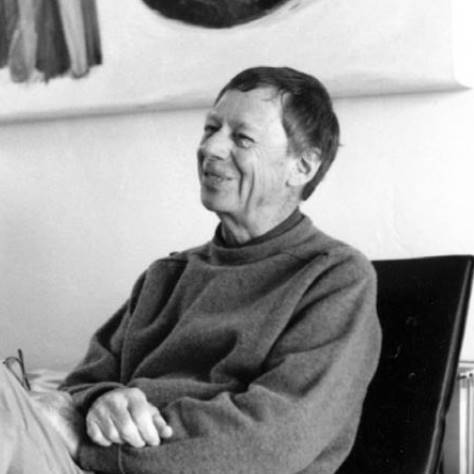
Paul Tuttle
Designer Biography
Paul Tuttle (1918–2002) was an American designer and architect known for his contribution to 20th-century furniture design and his ability to combine formal simplicity, technical innovation and comfort. His creations, characterised by lightweight lines and refined structures, represent a distinctive meeting point between Californian modernism and European manufacturing traditions.
Born in 1918 in Springfield, Missouri, Tuttle developed his professional career through practical experience and collaborations with leading figures in American architecture. After serving in the military during the Second World War, he moved into design, working in the studio of Alvin Lustig, an influential figure in American graphic design and modernism.
In 1949, he joined Frank Lloyd Wright's educational programme at Taliesin West, Arizona, where he deepened his understanding of the relationship between architecture, materials and the surrounding environment. He subsequently worked with the architectural practices of Welton Becket and Thornton Ladd, developing a design philosophy that extended beyond the traditional boundaries of furniture, architecture and interior design.
In 1956, he settled in Santa Barbara, California, where he developed a significant part of his professional practice. There, he designed furniture, interiors and private residences, experimenting with materials and construction techniques while paying particular attention to visual lightness and balanced proportions.
One of his most representative creations is the Z Chair, developed around 1964. Featuring a cantilevered chrome-plated steel frame and leather seating, the chair reflects Tuttle's exploration of material strength, structural stability and form. In 1966, he received the Carson Pirie Scott Young Designer Award, contributing to his growing recognition within the American design community.
From the late 1960s onwards, Tuttle established a long-standing collaboration with the Swiss furniture manufacturer Strässle, dividing his professional activity between California and Switzerland. This partnership allowed him to further explore industrial furniture production and experiment with innovative seating solutions using metal, leather, synthetic materials and advanced structural systems.
Among his best-known designs are the Nonna Rocking Chair, the Arco armchair, the Zeta model and the Chariot chaise longue. These creations demonstrate an approach in which elegance emerges not from decoration, but from precise proportions, material quality and the expressive character of the structure itself.
Alongside industrial production, Tuttle maintained a strong interest in custom-made furniture. During the 1980s, he expanded his collaborations with Californian craftsmen, including Bud Tullis, developing furniture for private residences and collectors.
His work was featured in important exhibitions, including a solo exhibition at the Pasadena Art Museum in 1966 and later retrospectives in Santa Barbara, which helped establish his position in the history of American design.
Paul Tuttle's legacy lies in his ability to transform industrial materials and structural solutions into objects of exceptional aesthetic balance. His seating designs, often defined by apparently simple yet technically sophisticated constructions, retain a modernity that extends beyond the trends of their time.
Today, his creations are appreciated by collectors and vintage design enthusiasts, particularly for their distinctive forms and the dialogue between Californian design sensibility and Swiss manufacturing precision.
Log in to enable designer alertsEnable alert for Paul Tuttle products